UPDATE: Brockton’s Charter Fiasco Continues As Controversial School Prepares to Leave Town

After multiple construction snafus that kept a controversial charter school from opening in Brockton, MA, the commissioner of Massachusetts public schools granted conditional approval yesterday for the school to temporarily move to a site in Norwood, 22 miles away from Brockton.

The decision to allow New Heights Charter School its last-minute move to Norwood is “political,” wrote Sue Szachowicz, the recently retired long-time principal of Brockton High, in an email. It shows how badly the Massachusetts department of education “wants to be sure that this school gets its opportunity.”

Adds Szachowicz:

This will be interesting to see what happens.  Norwood is a pretty affluent town, and not particularly easy to get to.  Parents who thought they would be sending their kids to school in downtown Brockton will get their kids to school over twenty miles away in Norwood???   I do not understand this one!  Politics, politics…”

Mitchell Chester along with Jim Peyser, the Massachusetts Secretary of Education and Gov. Charlie Baker, the Republican governor of Massachusetts, are all major proponents of an upcoming ballot initiative, known as Question 2, which would raise the Bay State’s cap on charter schools.

Chester did impose a number of conditions on New Heights, according to The Enterprise, the local newspaper: The school must offer two days of childcare to make up for pushing back the start of school. It must also establish occupancy in Brockton by January 3 or face charter probation or revocation. The school also must issue daily reports on student attendance on each of the first seven days of school, followed by weekly updates on enrollment counts, staffing and monthly financial statements.

“While it is not unusual for a new school to have challenges with a single site, it is rare to have it happen at two places,”said Jacqueline Reis, a spokesperson for Department of Elementary and Secondary Education. “Nonetheless, this is not the first charter school to open temporarily outside its region. … While a temporary site is not ideal, families appear willing to try to make it work.”

The Enterprise writes:

There will not be any additional taxpayer cost from the move, Reis said. Based on the maximum first-year enrollment of 315 students from the sixth to eighth grade, New Heights is receiving $3.96 million in combined state and local funds for its first year, which it supplements with grants and privately raised money.

Here is more background on Brockton-now-Norwood charter fiasco from an earlier post:

Amid an escalating battle over a statewide ballot initiative, this November, that would lift the cap on charter schools in Massachussetts, the Brockton charter mess highlights the greatest fears of charter skeptics, including:

–A sloppy approval process, and this in a state that prides itself on having the most rigorous charter approval process in the nation.

–A political establishment that ran rough-shod over the wishes of the local community.

–As families give up on the charter, which has enrolled about 200 students so far, well below its expected first-year enrollment of 315 students, for grades six through eight, they have already begun to return back to the public school system, wreaking havoc with enrollments.

As readers of this blog know, the New Heights charter was approved earlier this year over intense local opposition and after the organization’s first charter was derailed in 2015, at least in part, by the school’s failure to address Brockton’s large population of English Language Learners. At the time, in a scathing 14-page analysis of New Heights Charter School’s application to the state board, local officials, including School Superintendent Kathleen Smith and Mayor Bill Carpenter, urged the state to reject the application noting that the proposal “lacks services and supports for English language learners and students with disabilities.”

Within a year, New Heights had renewed its request for a charter, having addressed some of the flaws in its former proposal. Once again, the opposition was widespread. Opponents of New Heights’ application include the local newspaper, The Enterprise, which says it is generally “supportive” of charter schools. It included the mayor of Brockton, city council members, state representatives, members of the local school committee and, yes, parents—lots of them.

The New Heights Charter School will not serve Brockton’s diverse educational needs,  charged Tom Minichiello, vice chair of the Brockton School Committee: “Let’s look at what students the charter school wants: not our 30-plus percent English language learner population or our approximately 14 percent special education population. No, charter advocates want students from our grades 6-12 student population that testing shows are making progress. The data shows that the longer students remain within the Brockton school system, the more successful the test results.”

Indeed, Brockton is home to the largest and one of the poorest high schools in Massachusetts, and one of its greatest public school success stories .

The new charter, which plans to add high school grades, threatens Brockton’s steady trajectory. Were the charter to open, the Brockton school district expects to lose $10 million in funding, about 6 percent of its annual school budget. Tight budgets already have led to a net loss of funding at Brockton during the last two years. In the 2014-15 school year, Brockton High had to cut four teachers who taught electives in nutrition, cooking and personal finance. The school also has lost teachers via attrition. The result of a new charter, which expects to add high school classes, may be larger class sizes, which for many subjects at Brockton High already average around 35 students per class, according to Brockton’s new principal, Sharon Wolder.

New Heights has already postponed the start of school once. Yet, its founder is unapologetic. This is what Omari Walker, executive direc tof the New Heights Charter School told The Enterprise, the local newspaper: “The only thing I care about is the opinions of my family, friends, and families from my school.”

That disdain for the impact Walker’s school will have on the local community and its public schools, pretty much sums up a major critique of charter schools in general. It’s a disdain that Chester, Secretary of Education Jim Peyser, Gov. Charlie Baker, the Republican governor of Massachusetts, all major proponents of the upcoming ballot initiative, seem to share.

As I’ve noted in an earlier post, Massachusetts schools and children would benefit from more nuanced education policy, such as a draft law, known as the Rise Act, which sought to address many of the problems that have dogged the charter industry, including lack of transparency and community involvement. The Rise Act, which went no where, sought, among other things, to strengthen community involvement by requiring charters to have parents on their boards and by increasing the ability of local school committees to reject charters in their communities.

Had Brockton had that power, the New Heights fiasco would never have happened.


Posted in Brockton, MA, Charter Schools, Education, Massachusetts Education Reform | Tagged , , , , , , , | 3 Comments

Brockton’s Charter Fiasco Continues As Controversial School Prepares to Leave Town

A controversial charter school that was approved for Brockton, MA against overwhelming local opposition is now preparing to leave Brockton. The New Heights Charter School is now awaiting approval from Mitchell Chester, the commissioner of Massachusetts public schools, to move to a temporary location in neighboring Norwood, after multiple construction snafus in Brockton have kept the school from opening there, prompting local residents to wonder: How was this fiasco-of-a-charter ever approved in the first place?

Or, as Sue Szachowicz, the former principal of Brockton put it, in an email to me yesterday:  “I can’t believe this bumbling group was granted a charter.”

Amid an escalating battle over a statewide ballot initiative, this November, that would lift the cap on charter schools in Massachussetts, the Brockton charter mess highlights the greatest fears of charter skeptics, including:

–A sloppy approval process, and this in a state that prides itself on having the most rigorous charter approval process in the nation.

–A political establishment that ran rough-shod over the wishes of the local community.

–As families give up on the charter, which has enrolled about 200 students so far, well below its expected first-year enrollment of 315 students, for grades six through eight, they have already begun to return back to the public school system, wreaking havoc with enrollments.

As readers of this blog know, the New Heights charter was approved earlier this year over intense local opposition and after the organization’s first charter was derailed in 2015, at least in part, by the school’s failure to address Brockton’s large population of English Language Learners. At the time, in a scathing 14-page analysis of New Heights Charter School’s application to the state board, local officials, including School Superintendent Kathleen Smith and Mayor Bill Carpenter, urged the state to reject the application noting that the proposal “lacks services and supports for English language learners and students with disabilities.”

Within a year, New Heights had renewed its request for a charter, having addressed some of the flaws in its former proposal. Once again, the opposition was widespread. Opponents of New Heights’ application include the local newspaper, The Enterprise, which says it is generally “supportive” of charter schools. It included the mayor of Brockton, city council members, state representatives, members of the local school committee and, yes, parents—lots of them.

The New Heights Charter School will not serve Brockton’s diverse educational needs,  charged Tom Minichiello, vice chair of the Brockton School Committee: “Let’s look at what students the charter school wants: not our 30-plus percent English language learner population or our approximately 14 percent special education population. No, charter advocates want students from our grades 6-12 student population that testing shows are making progress. The data shows that the longer students remain within the Brockton school system, the more successful the test results.”

Indeed, Brockton is home to the largest and one of the poorest high schools in Massachusetts, and one of its greatest public school success stories .

The new charter, which plans to add high school grades, threatens Brockton’s steady trajectory. Were the charter to open, the Brockton school district expects to lose $10 million in funding, about 6 percent of its annual school budget. Tight budgets already have led to a net loss of funding at Brockton during the last two years. In the 2014-15 school year, Brockton High had to cut four teachers who taught electives in nutrition, cooking and personal finance. The school also has lost teachers via attrition. The result of a new charter, which expects to add high school classes, may be larger class sizes, which for many subjects at Brockton High already average around 35 students per class, according to Brockton’s new principal, Sharon Wolder.

New Heights has already postponed the start of school once. Yet, its founder is unapologetic. This is what Omari Walker, executive direc tof the New Heights Charter School told The Enterprise, the local newspaper: “The only thing I care about is the opinions of my family, friends, and families from my school.”

That disdain for the impact Walker’s school will have on the local community and its public schools, pretty much sums up a major critique of charter schools in general. It’s a disdain that Chester, Secretary of Education Jim Peyser, Gov. Charlie Baker, the Republican governor of Massachusetts, all major proponents of the upcoming ballot initiative, seem to share.

As I’ve noted in an earlier post, Massachusetts schools and children would benefit from more nuanced education policy, such as a draft law, known as the Rise Act, which sought to address many of the problems that have dogged the charter industry, including lack of transparency and community involvement. The Rise Act, which went no where, sought, among other things, to strengthen community involvement by requiring charters to have parents on their boards and by increasing the ability of local school committees to reject charters in their communities.

Had Brockton had that power, the New Heights fiasco would never have happened.
Posted in Brockton, MA, Charter Schools, Education, Massachusetts Education Reform | Tagged , , , , , , , , , | Leave a comment

In the Age of De Blasio, A Bloomberg Era Small School Reunion

In July, I found myself back in the East Harlem cafeteria shared by Global Technology Preparatory and P.S. 7. The occasion for my visit was a reunion of Global Tech’s first class of eighth-graders, who were now, four years after their middle-school commencement, graduating from high school.

I was eager to return and see how the students had fared. I knew from my ongoing contacts with the school and its students that several had endured more than their fair share of tragedy, including homelessness, violence and depression, and yet many were getting ready to go to college.

Global Tech, as the middle school became known, was one of the first public schools that I began to follow as part of my research on how business ideas, especially those of New York City Mayor Michael Bloomberg, would influence K-12 education. I also was curious to see how a school that was seen, in many ways, as a Bloomberg-era success story was faring under the administration of Mayor Bill De Blasio, and his schools chancellor, Carmen Fariña. A number of changes, some driven by the new administration’s desire to merge small schools—a major departure from Bloomberg policy—may foreshadow significant shifts at the school.

Here is the story I published this week in Gotham Gazette.

Below are some photos taken of Global Tech alumni at the reunion, in July, and during their frequent visits to the school, over the last few years, where they have maintained close ties with their former teachers.

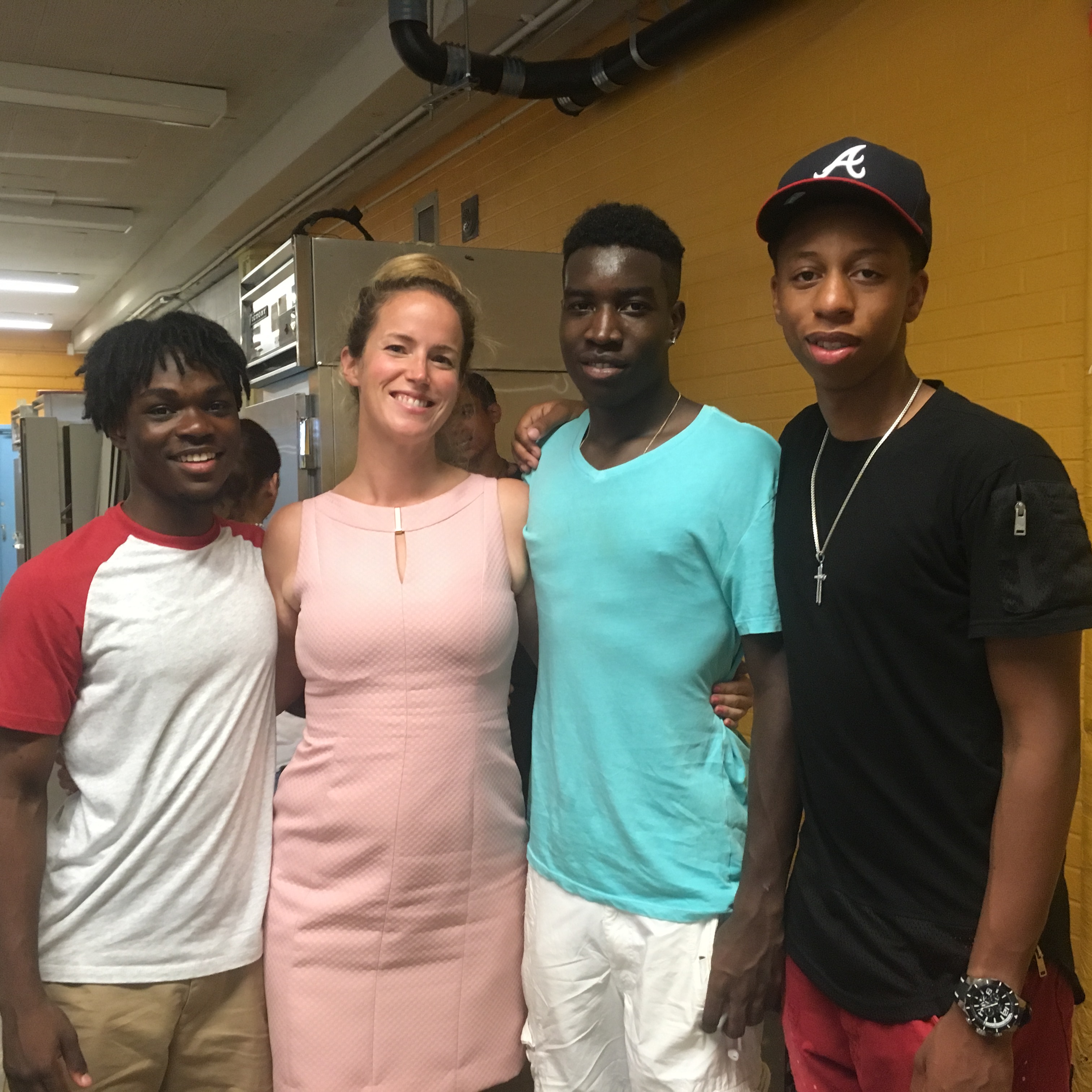
Chrystina Russell, founding principal of Global Tech with (from left) Quentin, who is going to Monroe College in New Rochelle; Travis, who is going to New York City Tech/CUNY; and Dariel who has been studying to be an auto mechanic and will attend Duchess Community College

Chrystina Russell, founding principal of Global Tech with (from left) Quentin, who is going to Monroe College in New Rochelle; Travis, who is going to New York City Tech/CUNY; and Dariel who has been studying to be an auto mechanic and will attend Duchess Community College

Kaira Bridge and Matthew1

Kaira (right) who was valedictorian at the iSchool and will be attending John Jay College of Criminal Justice/CUNY in the fall, chatting with her former teachers at the reunion. Jhonary Bridgemohan (left) still teaches ELA at Global Tech. Matt Fernandez came to the reunion from Long Island where he now serves as a police officer.

Jackie Pryce-Harvey helped found Global Tech with Russell, and now serves as interim-acting principal of P.S. 7; the two schools share a building.

Jackie Pryce-Harvey, at the Global Tech reunion, helped found the school with Russell, and now serves as interim-acting principal of P.S. 7; the two schools share a building.


PizzaParty1 - Copy

Reunited at an alumni pizza party in 2015

Raven and Baiz - Copy

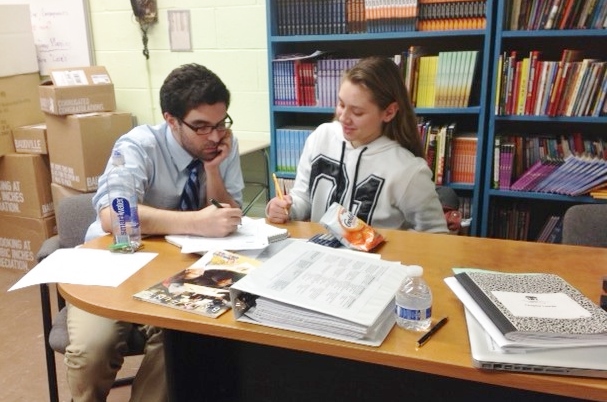
Raven gets help with her high school homework, in 2014, from David Baiz, her former math teacher, who succeeded Russell as Global Tech’s principal.

Posted in Education | Tagged , , , , , , , , , , | Leave a comment

Another Snafu At Controversial Bay State Charter

For the second time this month, construction has stopped on the controversial New Heights Charter School in Brockton, MA. Yesterday, the city of Brockton slapped a bright orange “stop work violation” order on the outside of the school’s new location at 1690 Main St. , for lack of adequate permits, according to Enterprise News.

The school already had won a four-day reduction in the school year from the state due to work stoppage at the school’s earlier site at 141 Main St., about 2.5 miles away. For more on the charter and why it has been so controversial see here .

The latest snafu comes just two weeks before the school’s delayed start date of Sept. 6. The school’s website posted the following notice to parents and families:

Dear Parents and Families,
We wanted to provide an update on the circumstances reported in the media yesterday.  We apologize for the manner in which the information was relayed to families. The media reported the situation at the same time that we were being informed. We apologize for the delay, but we wanted to confirm all facts prior to releasing any further information.

Yesterday, building officials issued a stop work order at our 1690 Main Street location. It appears that the contractors needed to submit and/or complete additional paperwork in order to be in compliance with all codes and regulations for the project. We met with the architect and the building owner, and they assure us that they are addressing all issues raised by the building officials. Our goal is to resume the renovation to the site as soon as possible. Once we are allowed to resume work, the contractors will take all necessary steps to ensure that the building will be ready. At this time, we are proceeding with our planned opening date of SEPTEMBER 6th, 2016.  New Heights Charter School of Brockton is excited that we will soon open our doors to students and families.

Please check our website for further updates. We look forward to serving all of you in the very near future.  Thank you for your patience.
Sincerely,

Omari Walker

Posted in Brockton, MA, Charter Schools, Education, Massachusetts Education Reform | Tagged , , , , | Leave a comment

Bay State Charter Campaign Gets A Black Eye in Brockton: New Heights Charter Unlikely to Open on Main St.

Merian New Heights

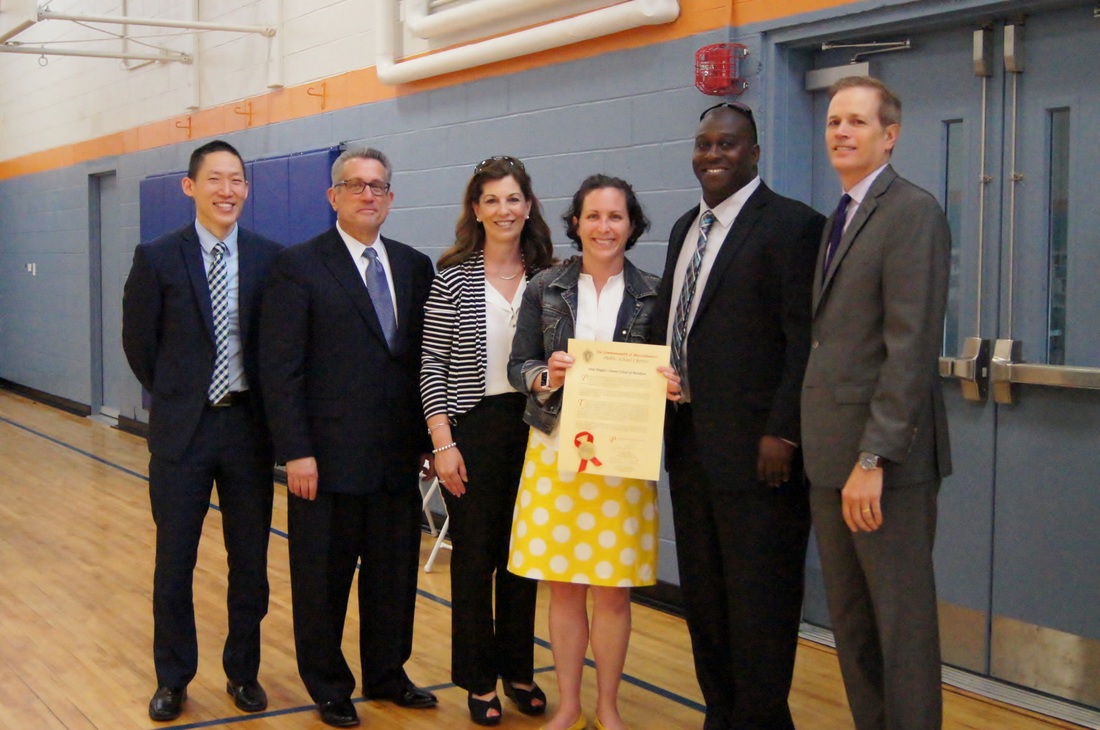
When New Heights received its charter from the State in June, executive director Omari Walker (second from right) posed with Commissioner Mitchell Chester (second from left) and Secretary of Education Jim Peyser (far right.)   Photo from New Heights website

The controversial New Heights Charter School won’t be moving into the space above the tuxedo-rental store and shuttered bridal shop on Main St., in downtown Brockton, MA., this September.

“They are not moving in; not coming into this building,” says John Merian, whose family has owned the building on Main St. for over 30 years. Merian won’t say more about how New Heights’ plan to renovate and occupy the Main Street space went awry, noting there are legal issues to be resolved.

As readers of this blog know, the New Heights proposal was approved by the state despite overwhelming opposition from the community, which is home to Brockton High, the states largest high school, as well as the single most successful school turnaround in Massachusetts history, which I’ve written about here and here.

So far, New Heights has said only that it is postponing its move-in date, according to The Enterprise, a local newspaper:

“New Heights recently submitted an amendment request to the Department to shorten year one of their school year from 184 days to 180 days to accommodate renovation delays,” said Lauren Greene, assistant to the chief of staff at the Massachusetts Department of Elementary and Secondary Education, in an email to The Enterprise. The request is still under consideration by the state, Greene said.

The New Heights website requests that applicants send mail to a post office box, noting “our building, 141 Main Street, is under construction.”

But the phone listed on the school’s website is a non-working number.

Omari Walker, executive director at New Heights, has said of the Merians—John runs the business with his brother Paul: “They have been some of the only folks to stand beside us…. ”

Merian, by contrast, insists that the decision to rent space to the charter school was “just a real estate deal.”

Adds Merian, a compact man with black hair and carefully trimmed door-knocker goatee: “I continue to be supportive of Brockton Public Schools, always will be.”

Merian 1

John Merian with three of his four children, all of whom attended Brockton public schools, on the eve of his daughter’s Brockton High prom

Merian has become an unlikely protagonist in a years-long battle against bringing a charter school to Brockton, a once thriving industrial city that, years ago, lost its storied shoe industry to foreign rivals. Once a working-class city of mostly European immigrants, like Merian’s Armenian grandparents who fled Turkey in the early 20th century, the  city now has a large population of newcomers from Haiti and Cape Verde.

Today, Merian is the rare business leader who supports his city’s public schools. Although Merian’s parents, who started the family bridal business, sent him to a local private school, Merian chose to send all four of his children to Brockton public schools; three of his children are now in college, a fourth is still in middle school. Paul sent his two children too. “Every public school system should look at what Brockton did,” says Merian, referring, in particular, to the high school from which six Merians will have graduated.

Indeed, Merian has worked closely with two principals at Brockton High—Sue Szachowicz who led the school’s legendary turnaround, as well as Szachowitz’s successor Sharon Wolder. Merian, who rents tuxedos for Brockton proms, also runs the school’s dress-for-success day and has worked with the school’s entrepreneurship classes on developing marketing skills.

Merian Sue

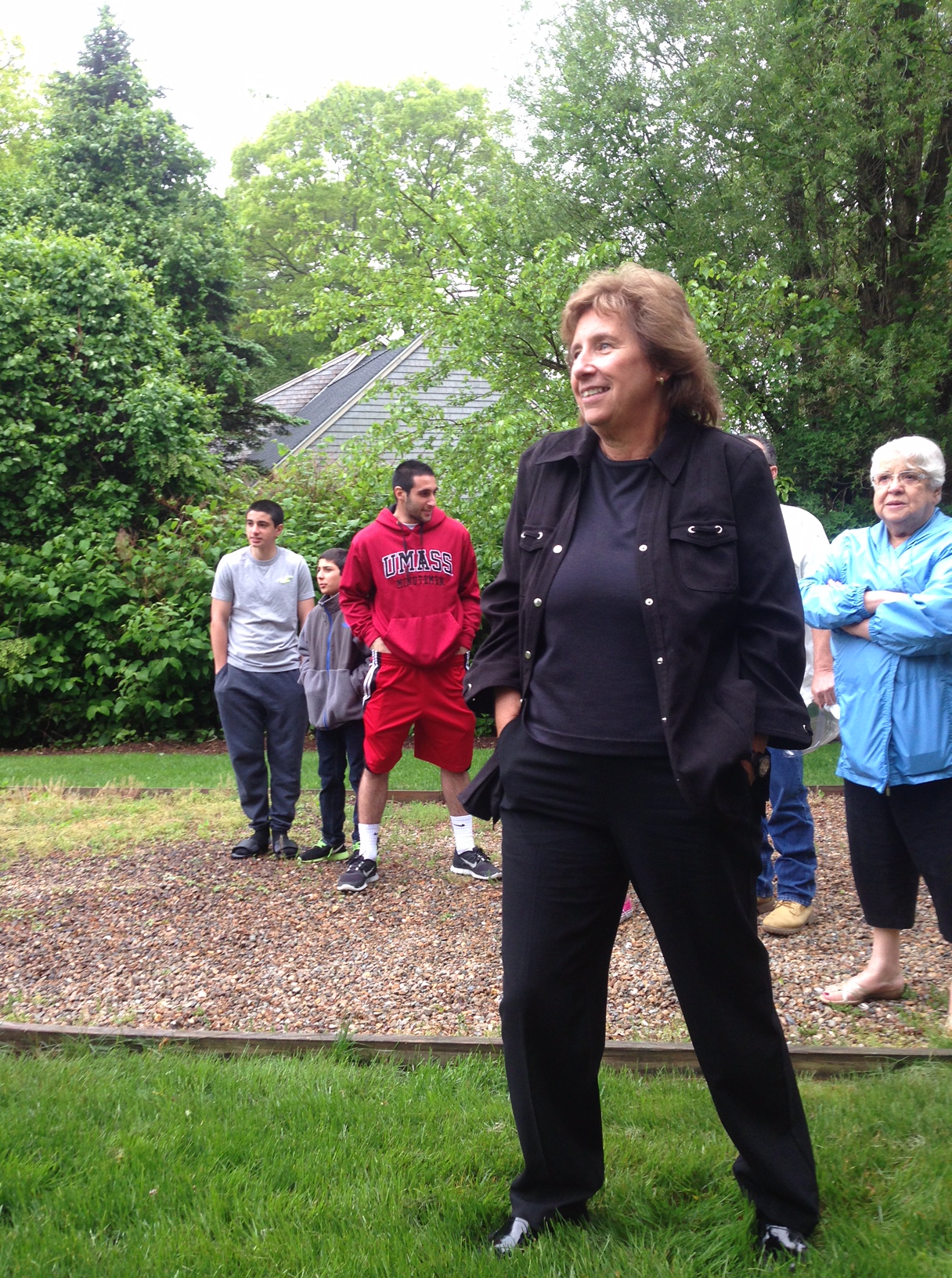
Sue Szachowicz, former principal of Brockton High, stopped by the Marien’s home shortly before the senior prom, just months after she had retired in 2013.

Over the years, most local businesses have either closed—like the bridal business that was started by Merian’s mother, Alyce Reizian—or moved out of Brockton. But the Merians have doubled down on their down-at-the-heels hometown.

Each winter, Merian dons a red cap trimmed in white fur and runs the annual Holiday Day parade down Main Street as the self-appointed chief elf, a post-Thanksgiving event that he calls “the ultimate community gathering” in a downtown with little left to boast about except that it once had the first department-store Santa. Edgar’s, originator of the department-store Santa and Brockton’s last major retailer, closed in the 1980s

But the decision to stay in Brockton has been challenging. Merian recently opened a fire restoration business that helps salvage clothing damaged in fires. He has diversified and now sells suits. And he uses the internet like a teleflorist, he says, to expand sales state-wide, taking measurements of tuxedo customers online and then visiting schools to deliver the suits and do last-minute adjustments.

Leasing the 30,000-square-foot space above the family’s store to New Heights promised to bring in $281,295 annually. A steady stream of kids and teachers and families trooping through Main Street each day also would help revitalize the downtown, Merian hoped.

That doesn’t look likely now. Whatever its real estate problems, New Heights also has fallen short of its enrollment targets.  In its first year, New Heights had expected to enroll 315 students, from grades six through eight; eventually the school expected to double in size and add high school grades. But as of the July 19, the Brockton School Committee had received only 170 required transfer requests for grades 6 to 8. The school is also expecting to hold another lottery for new students on August 23, prompting one reader of the local newspaper, the Enterprise, to post: “Why are they holding a FOURTH lottery if they have only a little over ½ the seats filled. Shouldn’t it be just first come, first served at this point?”

Merian building

New Heights was to lease 30,000 square feet above the Merians’s tuxedo store and the new-shuttered bridal store founded by the family matriarch, Alyce Reizian

New Heights problems offer an ironic twist to one of the highest-stakes charter-school dramas in the country. This November, Massachusetts residents will vote in a referendum on whether to lift the Commonwealth’s cap on charter schools—a measure backed by Charlie Baker, the state’s Republican governor, and Jim Peyser, the secretary of education; both men are said to be charter-school zealots. The ballot initiative comes complete with a multi-million dollar publicity campaign designed by the firm that developed the notorious Swift-boat ads that sank John Kerry’s 2004 presidential bid and financed, in part, by deep-pocketed charter advocates from out of state.

Once again, Brockton residents find themselves on the front lines of the battle over education reform. Nearly 25 years ago, a class-action lawsuit filed by a student at Brockton High, charging that Massachusetts was failing to provide “adequate” funding for its schools, led to the Commonwealth’s historic education reform act of 1993. The Massachusetts reforms, in turn, helped spark the historic turnaround at Brockton High.

Now, a new generation of reformers are convinced that what towns like Brockton need is competition in the form of charter schools. Except this time, Brockton residents are fighting the reformers. The town defeated New Heights’s first proposal two years ago, at least in part, because of the school’s failure to address Brockton’s sizeable English Language Learner population. Opponents of New Heights Charter School’s latest proposal, which was approved last February, included the local newspaper, The Enterprise, which says it is generally “supportive” of charter schools. It included, the mayor of Brockton, city council members, state representatives, members of the local school committee and, yes, parents.

The State pushed through approval of the Brockton charter, arguing in part, that there is great demand for schools like New Heights. Brocktonians beg to differ.

Posted in Brockton, MA, Business, Charter Schools, Education, Massachusetts Education Reform | Tagged , , , , , , , , , , , , , | Leave a comment